Starting an online business is something I believe almost anyone can explore today. We have access to the internet, smartphones, computers, social media platforms, and many free tools that can help us get started without spending a huge amount of money. The best part is that you do not always need an office, employees, or expensive equipment to begin.
When I first started learning about online businesses, I realized that the biggest challenge was not always money. It was choosing the right idea and staying consistent with it. There are many online business opportunities available, but some require much less investment than others.
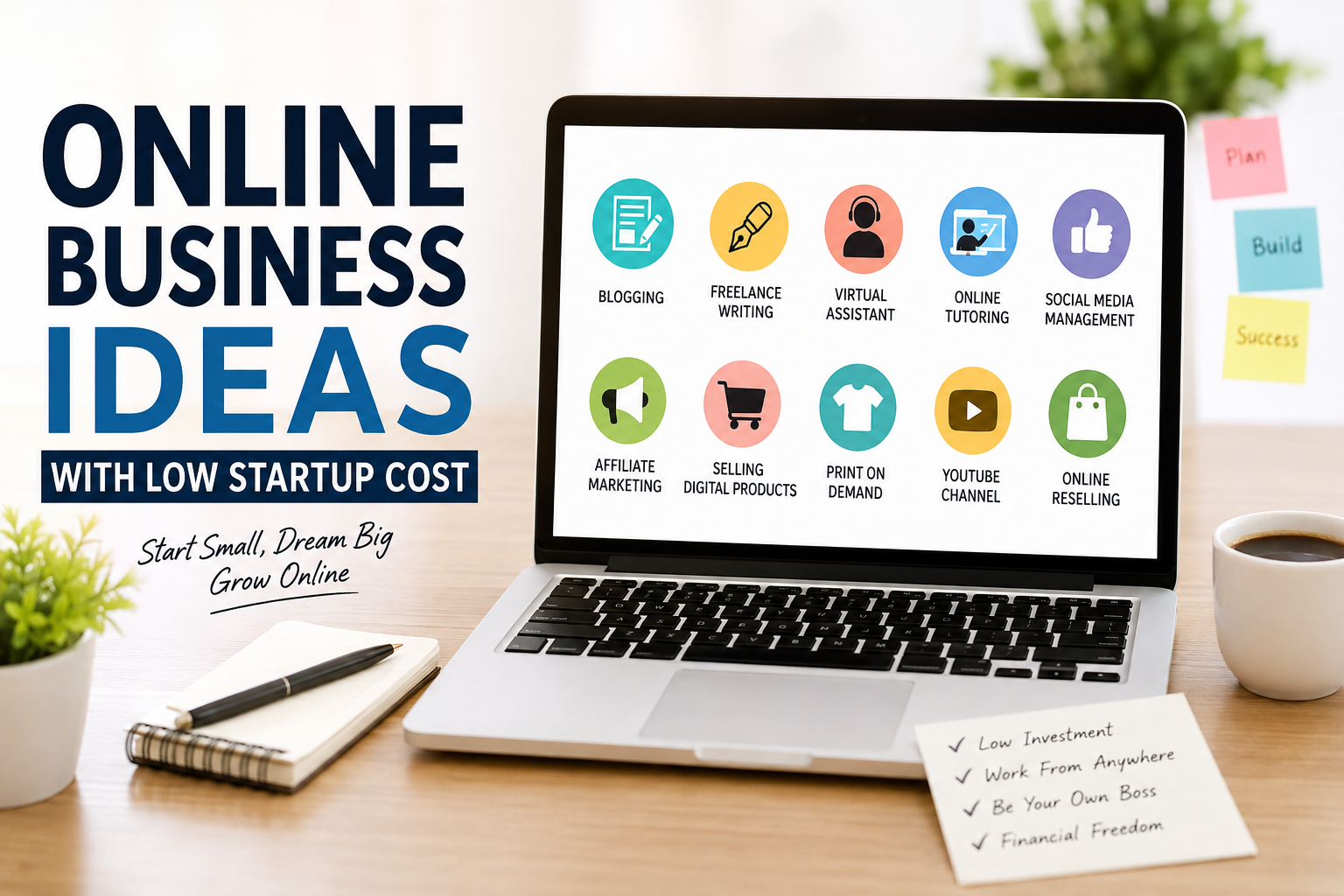
In this article, I want to share some online business ideas with low startup costs that beginners can consider. These ideas are suitable for people who want to start small and gradually build something bigger.
1. Blogging
Blogging is one of the first online business ideas that comes to my mind when I think about low startup costs. If you enjoy writing about a particular topic, you can create a website and publish useful articles for readers.
You do not need expensive equipment. A basic computer and an internet connection can be enough to get started. You may need to spend some money on a domain name and hosting, but the initial cost can still be relatively low compared with many traditional businesses.
The important thing is choosing a topic that you understand or are willing to learn about. You could write about technology, travel, personal finance, education, software, cooking, hobbies, or many other subjects.
A blog can eventually earn money through advertising, affiliate marketing, sponsored content, and digital products. However, I would not expect instant income. Blogging usually requires patience because building traffic takes time.
2. Freelance Writing
If you are comfortable with writing, freelance writing can be another affordable online business to start.
Many websites, businesses, and online publications need writers for blog posts, product descriptions, website content, newsletters, and other forms of written content.
The main investment is your time and your writing skills. You can create a few writing samples and use them as a portfolio when approaching potential clients.
In my opinion, beginners should not focus only on finding the highest paying clients immediately. Building experience and improving your skills can be more valuable at the beginning.
As your experience grows, you can increase your rates and specialize in a particular area.
3. Virtual Assistant Services
A virtual assistant helps businesses and individuals with online tasks. These tasks can include answering emails, organizing schedules, managing files, doing basic research, updating spreadsheets, and handling other administrative work.
I like this idea because you can start with skills you already have. If you are organized, communicate well, and know how to use basic computer applications, you may already have a foundation for this type of work.
You can start by offering a few specific services instead of trying to do everything. For example, you could focus on email management or social media scheduling.
Once you gain regular clients, you can turn your freelance work into a small virtual assistant agency.
4. Online Tutoring
If you are knowledgeable about a particular subject, online tutoring can be a good low cost business opportunity.
You could teach school subjects, languages, computer skills, music, or other subjects you understand well. Classes can be conducted through video calling platforms, which means you do not necessarily need a physical classroom.
The biggest advantage is that you are selling your knowledge rather than physical products. This means there is no need for inventory or a warehouse.
I think online tutoring works especially well when you focus on a specific group of students. For example, instead of simply offering English lessons, you could offer beginner English lessons for adults or conversational English for students.
5. Social Media Management
Many small businesses understand that social media is important, but business owners often do not have enough time to manage their accounts.
This creates an opportunity for people who understand platforms such as Facebook, Instagram, TikTok, LinkedIn, and other social networks.
As a social media manager, you might create posts, schedule content, respond to comments, research ideas, and prepare simple reports.
You do not need a large investment to begin. A computer, internet connection, and knowledge of social media can be enough.
I would recommend creating sample posts for imaginary businesses before looking for clients. This can help you demonstrate what you can do even if you have no previous professional experience.
6. Affiliate Marketing
Affiliate marketing is another online business model that can be started with relatively little money.
The basic idea is simple. You recommend products or services from other companies and receive a commission when someone makes a qualifying purchase through your affiliate link.
You can promote products through a blog, YouTube channel, social media account, email newsletter, or another platform.
However, I believe beginners should focus on helping people rather than simply posting affiliate links everywhere. If your content is useful and your recommendations are honest, people are more likely to trust you.
For example, you could create detailed comparisons, tutorials, reviews, and buying guides related to a topic you understand.
Affiliate marketing can take time because you first need an audience. But once you build consistent traffic, it can become an interesting source of online income.
7. Selling Digital Products
Digital products are attractive because you can create them once and potentially sell them multiple times.
Examples include ebooks, templates, planners, checklists, educational materials, design resources, spreadsheets, and online guides.
For example, if you are good at budgeting, you could create a simple budget spreadsheet. If you understand blogging, you could create a beginner blogging checklist.
The cost of creating digital products can be very low because there are no manufacturing or shipping expenses.
Personally, I think the most important part is solving a real problem. A digital product does not need to be complicated. Sometimes a simple resource that saves someone time can be valuable.
8. Print On Demand
Print on demand allows you to sell products such as shirts, mugs, notebooks, and other items without keeping inventory yourself.
You create a design and upload it to a print on demand service. When a customer orders the product, the service handles production and shipping.
This makes the business easier to start than a traditional clothing or merchandise business.
The challenge is competition. There are many designs available online, so creating something unique and targeting a specific audience can make a difference.
Instead of trying to sell designs to everyone, I would focus on a particular interest or community.
9. YouTube Channel
Starting a YouTube channel can also be done with a small budget. You do not necessarily need a professional camera at the beginning because modern smartphones can record good quality videos.
You can create videos about almost anything you know or enjoy. Tutorials, educational content, product reviews, personal experiences, cooking, technology, travel, and entertainment are just a few possibilities.
The hardest part, in my opinion, is consistency. Many people upload a few videos and stop because they do not get immediate results.
YouTube can take time to grow, so I would focus first on improving the quality and usefulness of the content rather than obsessing over views.
10. Online Reselling
Online reselling involves buying products at a lower price and selling them at a higher price.
You can start by finding products from local suppliers, clearance sales, wholesalers, or other sources and then selling them through online marketplaces or social media.
The advantage is that you can start with a small number of products instead of investing heavily in inventory.
However, I would recommend researching demand before buying anything. A cheap product is not necessarily a good product to sell if nobody wants it.
Start small, learn what customers prefer, and reinvest your profits carefully.
How to Choose the Right Online Business
With so many options available, choosing one can feel confusing. I think the best approach is to consider your existing skills, interests, available time, and budget.
If you enjoy writing, blogging or freelance writing could be suitable. If you enjoy teaching, online tutoring may be a better choice. If you understand social media, social media management could be worth exploring.
You should also think about whether you want to sell services or products. Services can often be started faster because you are selling your skills. Products can take more preparation but may offer opportunities to build something that can be sold repeatedly.
Most importantly, do not try to start five businesses at the same time. Pick one idea and give it enough time to understand whether it works.
Mistakes Beginners Should Avoid
One common mistake I see is spending too much money before proving that the business idea has demand.
You do not need a perfect logo, expensive website, or premium tools on the first day. Start with the basics and improve as your business grows.
Another mistake is expecting quick money. An online business is still a business. It requires learning, testing, marketing, customer service, and consistency.
I also think beginners should avoid copying every trend they see online. What works for one person may not work for another. Instead, learn the basic principles and build something that matches your own skills.
Final Thoughts
Starting an online business with a low budget is more realistic today than it was in the past. There are many opportunities for people who are willing to learn and put in consistent effort.
Blogging, freelance writing, virtual assistance, online tutoring, social media management, affiliate marketing, digital products, print on demand, YouTube, and online reselling are just some of the possibilities.
From my point of view, the amount of money you start with is not the only thing that matters. Your skills, patience, consistency, and ability to understand what people actually need can make a much bigger difference.
I would recommend starting small, testing your idea, learning from your mistakes, and reinvesting carefully. You do not need everything to be perfect before you begin. Sometimes the best way to understand an online business is simply to start, learn, improve, and keep moving forward.