When I started thinking seriously about business, one thing I quickly understood was that making money is only one part of running a successful business. Knowing where that money goes is just as important. A business can have good sales and still struggle if expenses are not managed properly. This is why I believe every small business owner should have a simple business budget.
A budget does not have to be complicated. In my opinion, a simple budget that you actually understand and update regularly is much more useful than a complicated spreadsheet that you never check. A good budget helps me see how much money is coming into the business, how much is going out, and what I can realistically afford.
In this article, I will explain how I would create a simple business budget and how this process can help a small business become more organized and financially stable.
Understand Why a Business Budget Matters
Before creating a budget, I think it is important to understand why you need one. A business budget gives you a clear picture of your financial situation. Without one, it is very easy to spend money without realizing how quickly expenses are growing.
For example, I might think that spending a small amount on software, advertising, supplies, and other services is not a big deal. But when all these expenses are added together at the end of the month, the total can be surprisingly high.
A budget helps me make better decisions before spending money. It also gives me a better idea of whether the business is actually making a profit.
I also see a budget as a planning tool. It is not only about recording what happened in the past. It can help me prepare for future expenses, slow sales periods, business improvements, and unexpected costs.
Start With Your Business Income
The first thing I would do when creating a business budget is estimate how much money the business earns.
If the business already has a history of sales, I can look at previous months and use that information to make a reasonable estimate. If the business is new, I would make a conservative estimate based on expected customers, prices, and sales.
I prefer to avoid making overly optimistic income predictions. It is better to expect reasonable sales and be pleasantly surprised if the business earns more.
For example, if I expect the business to generate around $5,000 in monthly revenue, I can use that number as a starting point. If sales change from month to month, I can create different estimates for each month instead of using the same number throughout the year.
The goal is to have a realistic picture of how much money may come into the business.
List All Fixed Expenses
The next step is to write down the expenses that usually stay the same each month. These are often called fixed expenses.
Examples can include office rent, website hosting, accounting services, business insurance, software subscriptions, and certain salaries.
I find it helpful to list every fixed expense separately rather than simply writing one large total. This makes it easier to identify expenses that may no longer be necessary.
For example, if I am paying for several online services that I rarely use, seeing them clearly in my budget makes the situation easier to recognize.
Once I have listed these expenses, I add them together to understand how much money the business needs every month just to cover its regular commitments.
Calculate Variable Expenses
After fixed expenses, I would look at variable expenses. These costs can change depending on how much business I do.
Examples include inventory, packaging, shipping, advertising, sales commissions, transaction fees, and certain supplies.
Variable expenses can sometimes be harder to estimate because they are connected to business activity. If sales increase, some variable costs may also increase.
I usually look at previous spending patterns when possible. If I do not have previous information, I make a reasonable estimate and adjust it as real numbers become available.
Keeping variable expenses under control can make a big difference to profitability. Sometimes a business does not have an income problem. It simply has expenses that are growing too quickly.
Separate Business and Personal Money
One of the most important things I would recommend is keeping business money separate from personal money.
When personal and business expenses are mixed together, it becomes difficult to understand how the business is actually performing. It can also make record keeping much more confusing.
I would use a separate business bank account whenever possible. Business income should go into that account, while business expenses should be paid from it.
If I need money for personal use, I would treat that as a separate personal withdrawal rather than randomly taking money from the business account.
This simple habit can make budgeting and financial tracking much easier.
Create a Monthly Budget
Once I know my expected income and expenses, I can create a monthly budget.
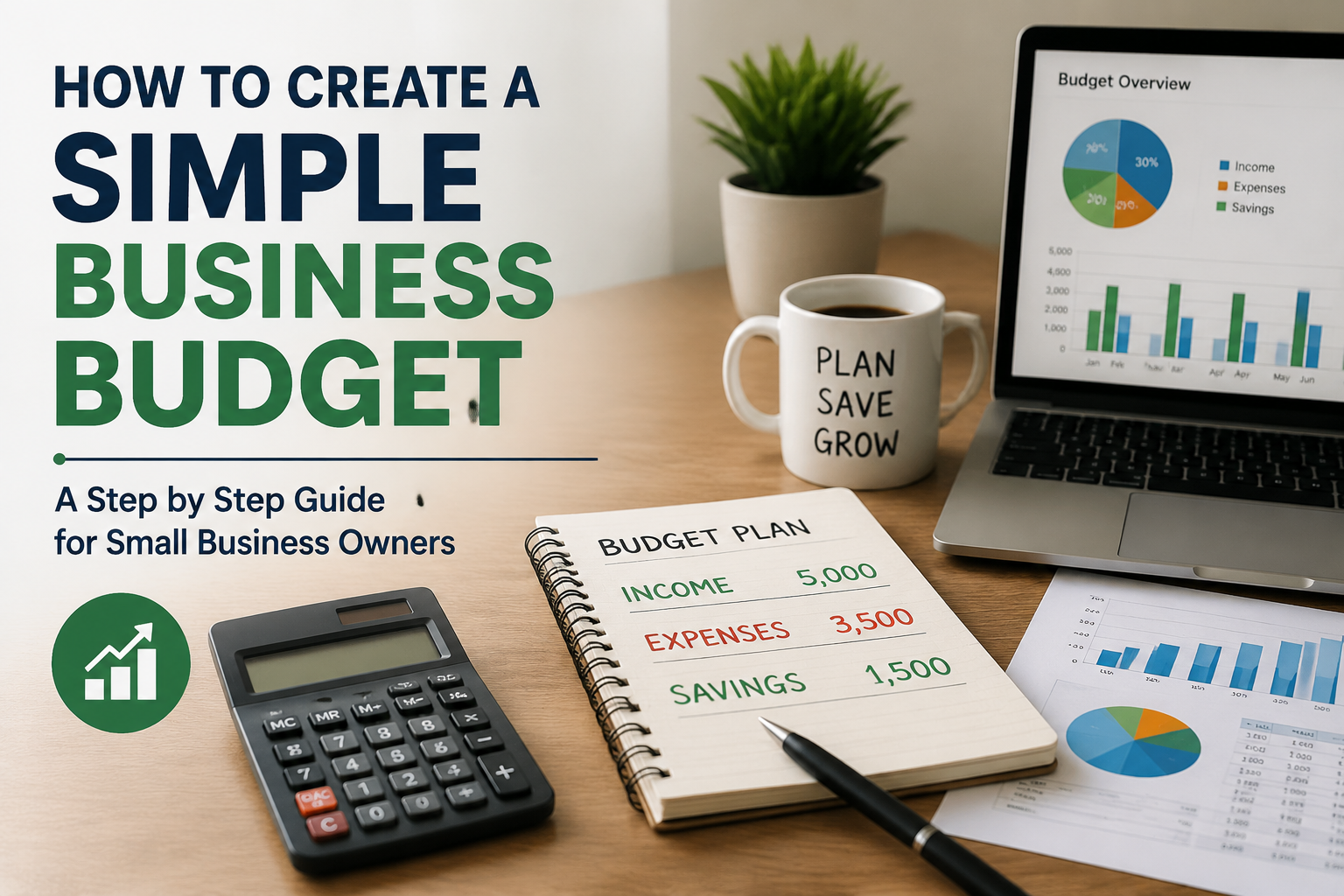
A simple budget can contain three main sections. The first section is expected income. The second section is expected expenses. The third section is the amount I expect to have left after expenses.
For example, if my expected monthly income is $5,000 and my expected expenses are $3,500, I would expect to have $1,500 remaining.
This does not necessarily mean that the entire amount is available for personal use. I may need to save part of it for taxes, future expenses, business growth, or emergencies.
The main purpose is to understand where the money is going and what is realistically available.
Include an Emergency Fund
I believe every business should prepare for unexpected expenses. Things do not always go according to plan.
A computer might stop working. Equipment might need repair. A supplier might increase prices. Sales might suddenly decline. An important customer might delay payment.
For these reasons, I would include an emergency fund in my business planning.
Even if I cannot save a large amount immediately, putting aside a small amount regularly can create a useful financial cushion.
The exact amount depends on the type and size of the business. What matters most is developing the habit of preparing for unexpected situations.
Set Spending Limits
A budget becomes more useful when I turn it into spending limits.
For example, if I decide that the business can spend $500 per month on advertising, I should try to stay close to that amount unless there is a good reason to change the plan.
This does not mean that the budget can never change. Business conditions change all the time. However, having a limit makes me think before spending.
I would ask myself whether an expense is necessary, whether it can generate a return, and whether the business can comfortably afford it.
This small habit can prevent unnecessary spending.
Track Your Actual Spending
Creating a budget is only the beginning. I also need to track what actually happens.
At the end of each week or month, I would compare my expected numbers with my actual numbers.
Maybe I expected to spend $300 on advertising but actually spent $450. Maybe I expected $5,000 in sales but generated only $4,200.
These differences tell me something important.
If an expense is consistently higher than expected, I need to understand why. If income is lower than expected, I may need to change my sales strategy or reduce certain expenses.
The more regularly I compare actual results with my budget, the easier it becomes to make informed decisions.
Review Your Subscriptions
One area I would personally pay close attention to is recurring subscriptions.
Businesses often collect many small monthly subscriptions over time. A website may need hosting, email services, design tools, accounting software, communication tools, storage services, and other platforms.
Each subscription may seem affordable by itself. The problem is that they can add up quickly.
I would review these expenses regularly and ask whether each service is still useful.
If I have not used a service for several months, cancelling it could free up money that can be used somewhere more valuable.
Plan for Taxes
Taxes should not be treated as an unexpected expense. I would include them in my financial planning from the beginning.
The exact tax requirements depend on the country, business structure, income, and other factors. Because of this, I would keep proper financial records and consider getting professional advice when necessary.
The important point is to avoid spending money that may later be needed for taxes.
Setting aside money regularly can make tax payments much easier to manage.
Use Simple Tools
I do not think a small business needs expensive financial software just to create a basic budget.
A simple spreadsheet can be enough when starting out. I can create columns for income, fixed expenses, variable expenses, savings, and remaining cash.
There are also many budgeting and accounting tools available, but I would choose one based on the actual needs of the business.
The best system is the one I can use consistently.
A simple budget that I update every month is better than an advanced system that feels too complicated to maintain.
Adjust the Budget Regularly
A business budget should not be treated as a document that I create once and forget.
Business conditions can change. Sales can increase or decrease. Costs can rise. New opportunities can appear. Some expenses can disappear.
Because of this, I would review the budget every month.
If I notice that my original estimates are no longer realistic, I would update them. Changing the budget does not mean the budget failed. It means I am using new information to make better decisions.
In my opinion, flexibility is one of the most important parts of business budgeting.
Final Thoughts
Creating a simple business budget does not have to be difficult. I believe the process becomes much easier when I focus on the basics.
First, I would estimate my income. Then I would list fixed and variable expenses. After that, I would create a monthly spending plan, prepare for taxes and emergencies, and regularly compare my budget with actual results.
The main purpose of a budget is not to restrict every business decision. Instead, it gives me more control and confidence when making those decisions.
When I know how much money is coming in and where it is going, I can make smarter choices about advertising, hiring, equipment, savings, and growth.
For me, a simple business budget is one of the easiest ways to bring more discipline into a small business. It helps turn financial information into something I can actually understand and use.
I do not need a perfect budget. I just need a realistic one that I am willing to review and improve. Over time, this simple habit can help a business stay organized, avoid unnecessary spending, prepare for difficult periods, and create a stronger foundation for future growth.