When I started learning more about small business management, I realized that tracking expenses is one of those things that looks simple but can quickly become confusing. Money comes into the business, money goes out, and if I do not keep proper records, it becomes difficult to understand where the money is actually going.
For me, expense tracking is not only about keeping receipts or writing numbers into a spreadsheet. It is about knowing how my business is performing and making better decisions with the money I have. A small business does not always have a large budget, so even small unnecessary expenses can affect profits over time.
The good thing is that tracking small business expenses does not have to be complicated. With a few simple habits and the right tools, I can keep everything organized without spending hours every week doing accounting work.
Start With a Separate Business Account
One of the easiest ways I can make expense tracking simpler is by keeping business money separate from personal money. When personal and business expenses are mixed together, it becomes difficult to know which transactions actually belong to the business.
I prefer to have a separate bank account for business income and expenses. When I use that account only for business activities, checking my transactions becomes much easier.
For example, if I buy office supplies, pay for software, purchase advertising, or pay for a business service, those payments can be recorded directly as business expenses. I do not have to go through hundreds of personal transactions to find them later.
A separate business account also makes things easier when I need to review my finances or prepare information for tax purposes.
Keep All Business Receipts
Receipts may seem unimportant when the expense is small, but I believe keeping them is a very good habit. Small expenses can add up quickly, and without receipts, I may forget what I purchased or why I purchased it.
I keep digital copies of important receipts whenever possible. If I receive a paper receipt, I can take a clear photo of it and save it in a dedicated folder.
I also try to name digital files clearly. Instead of saving a receipt with a random file name, I can use something like “Office Supplies August 2026.” This makes it much easier to find later.
Keeping receipts also gives me proof of business purchases if I need to review an expense in the future.
Create Simple Expense Categories
Another thing that makes tracking easier is using simple categories. I do not need dozens of categories because that can make the process more confusing.
Some useful categories can include office supplies, software, advertising, transportation, internet, phone, professional services, equipment, rent, and other business expenses.
For example, if I pay for an online design tool, I can put it under software expenses. If I purchase paper and printer supplies, I can record them under office supplies.
The purpose of categories is to understand where my money is going. At the end of the month, I can look at each category and quickly see which areas are costing the most.
Use a Spreadsheet
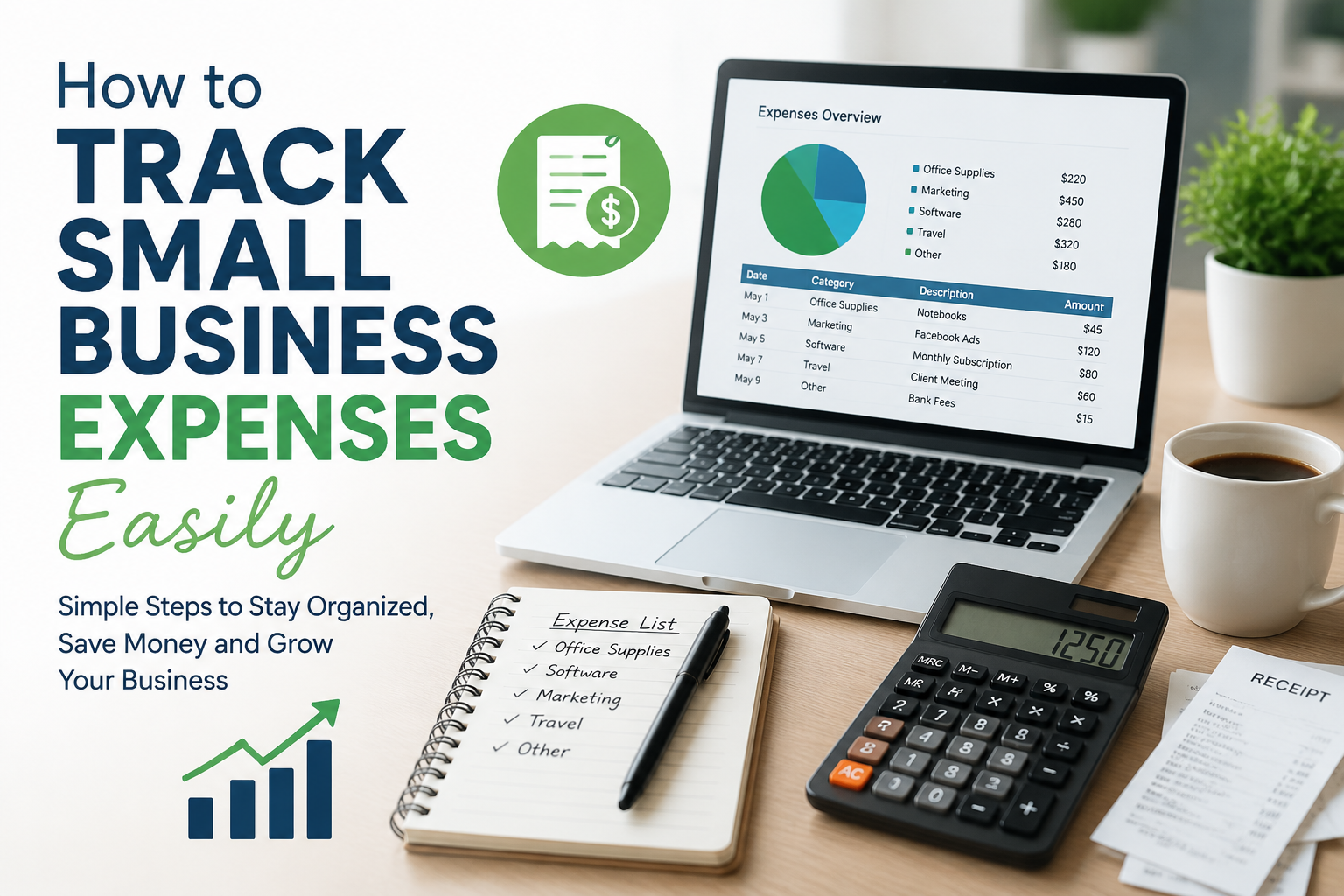
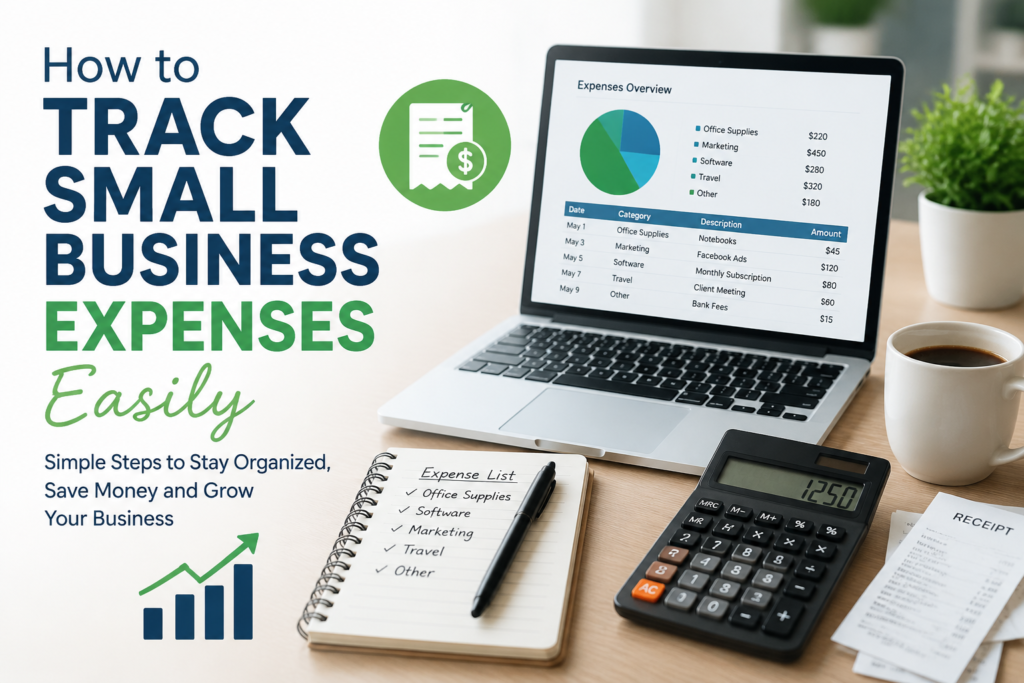
A simple spreadsheet can be enough for many small businesses. I do not always need expensive accounting software, especially when the business is still small and has a limited number of transactions.
I can create columns for the date, expense description, category, payment method, amount, and notes.
For example, a simple entry might look like this:
Date: August 5
Description: Website hosting
Category: Software and services
Payment Method: Business card
Amount: $25
Notes: Monthly hosting payment
Once I have this information recorded, I can easily calculate how much I have spent during the month.
A spreadsheet also allows me to sort expenses by category or date. This makes reviewing my business finances much easier.
Track Expenses Regularly
One mistake I try to avoid is waiting until the end of the month to track everything. When there are dozens of transactions, it becomes easy to forget what certain payments were for.
I find it much easier to spend a few minutes every day or a short amount of time each week recording expenses.
For example, I can choose one day each week to review my bank account and credit card transactions. I check each business payment and enter it into my expense tracker.
This small habit can save a lot of time later. Instead of trying to remember everything at the end of the month, I already have most of the information recorded.
Use Expense Tracking Apps
As a business grows, a spreadsheet may not be enough. At that point, an expense tracking application can make things much easier.
Many modern accounting and finance tools allow me to connect a business bank account or credit card. Transactions can then appear automatically in the software, and I can categorize them.
Some tools also allow me to photograph receipts and attach them to transactions. This can reduce manual work and help keep records organized.
However, I would not choose software simply because it has many features. I prefer something that is easy to understand and fits the size of my business.
The best tool is usually the one I will actually use consistently.
Review Bank and Credit Card Statements
Even when I use an expense tracking system, I still believe it is important to compare my records with my bank and credit card statements.
Sometimes a transaction may be entered incorrectly. Sometimes I may forget to record a payment. There can also be automatic subscriptions that I have forgotten about.
By reviewing statements regularly, I can identify mistakes and unexpected charges.
This is also a good opportunity to look for subscriptions that I no longer need. A business can easily lose money through small recurring payments that are no longer useful.
Watch Recurring Expenses
Recurring expenses deserve special attention because they continue automatically.
For example, I might pay monthly for cloud storage, website hosting, business software, advertising platforms, communication services, or other subscriptions.
Individually, these payments may not seem expensive. But when several subscriptions are combined, they can become a significant monthly cost.
I like to review recurring expenses regularly and ask myself whether each service is still providing value.
If I am paying for something I rarely use, cancelling it can immediately reduce my business expenses.
Separate Personal and Business Purchases
Sometimes business owners use personal cards for business purchases because it is convenient. While this can happen, it can make expense tracking more difficult.
If I have to use a personal card for a business expense, I make sure to record it properly and keep the receipt.
However, whenever possible, I prefer using a dedicated business payment method. This keeps my records cleaner and reduces the chance of forgetting an expense.
Clear separation also makes it easier to understand the actual financial condition of the business.
Check Your Expenses Every Month
Monthly reviews are one of my favorite ways to understand business spending.
At the end of each month, I can look at my total expenses and compare them with previous months. I can ask simple questions such as whether my expenses increased, whether a particular category became more expensive, and whether I am getting enough value from the money I am spending.
For example, if advertising expenses increased significantly but sales did not improve, I may need to reconsider my advertising strategy.
If software costs continue increasing, I may look for less expensive alternatives.
These small reviews can help me make better financial decisions.
Do Not Ignore Small Expenses
One of the biggest lessons I have learned is that small expenses should not be ignored.
Spending five dollars here and ten dollars there may not feel important. But when these purchases happen regularly, they can become hundreds of dollars over a year.
A business can lose money through small unnecessary expenses without the owner noticing.
That is why I prefer to record everything, even when the amount seems insignificant. Seeing the complete picture helps me understand my actual spending habits.
Make Expense Tracking a Routine
The most effective way to track expenses is to turn it into a routine instead of treating it as a task that I only do when something goes wrong.
I can spend ten or fifteen minutes each week checking transactions, organizing receipts, and updating my records.
Once this becomes a habit, it does not feel like a difficult job anymore.
Consistency is more important than having a complicated system. A simple system that I use every week is much better than an advanced system that I ignore for months.
Final Thoughts
Tracking small business expenses easily is mainly about staying organized and creating simple habits. I do not need to make the process complicated or spend a lot of money on expensive tools.
For me, the most useful steps are keeping business and personal money separate, saving receipts, using simple categories, updating records regularly, reviewing bank statements, and checking expenses every month.
The main goal is to know where the business money is going. When I understand my expenses, I can identify unnecessary spending, protect my profits, plan future purchases, and make more confident business decisions.
A small business does not need a perfect financial system from day one. What matters most is starting with a simple method and using it consistently. As the business grows, I can improve the system and use more advanced tools when they become necessary.
In my opinion, expense tracking is one of the easiest financial habits that can make a real difference in a small business. When I know exactly what I am spending, I have more control over my money and a much clearer idea of where my business is heading.