When I think about marketing a business, I do not think it always needs to be complicated. Many small business owners believe they need a big budget, a large team, or advanced marketing tools to promote their business. In my opinion, that is not always true. A simple marketing plan can be enough to give a business direction and help it reach the right customers.
A marketing plan is basically a roadmap. It helps me understand who I want to reach, what I want to offer them, where I should promote my business, and how I will know whether my efforts are working. Without a plan, it is easy to spend time and money on marketing activities that do not bring useful results.
In this article, I will explain how I would create a simple business marketing plan from the beginning. These steps can be useful for a new business as well as an existing small business that wants to improve its marketing.
Start With a Clear Business Goal
The first thing I would do is decide what I actually want to achieve. Marketing without a clear goal can become confusing because I may keep trying different things without knowing what success looks like.
For example, my goal could be to get more website visitors, increase sales, find new customers, promote a new product, or make more people aware of my business.
I would avoid setting a goal that is too general. Instead of saying that I want to grow my business, I would create a more specific goal. For example, I might want to get 50 new customers in the next three months.
A clear goal gives me something to work toward and makes it easier to measure my progress.
Understand My Target Customers
The next step is understanding who I want to sell to. I believe this is one of the most important parts of a marketing plan because I cannot effectively market a product if I do not understand the people who may need it.
I would think about my ideal customer and ask simple questions. What problem are they trying to solve? What type of product or service do they need? What are their interests? Where do they normally search for information? What might stop them from buying?
For example, if I run a small clothing business, my target customers may be students or young adults who are interested in affordable and comfortable clothing.
Knowing this information helps me create marketing messages that feel more relevant to my audience.
Study the Competition
I would also spend some time looking at businesses that offer similar products or services. This does not mean copying them. Instead, I would study what they are doing well and where there may be opportunities for my business.
I would look at their websites, social media pages, customer reviews, prices, offers, and content. I would try to understand what makes them different from other businesses.
Sometimes, reading customer reviews can be especially useful. Positive reviews can show me what customers appreciate, while negative reviews can help me identify problems that my business could solve better.
The main purpose is to learn about the market and find my own way to stand out.
Define What Makes My Business Different
After understanding my customers and competitors, I would decide what makes my business special. This is sometimes called a unique selling point.
It does not have to be something completely new. It could be better customer service, affordable prices, faster delivery, better quality, a simple buying process, or a more personal experience.
For example, if several businesses sell similar products, I might focus on friendly customer support and quick responses.
I believe customers need a reason to choose one business instead of another. A clear difference can make my marketing much stronger.
Choose the Right Marketing Channels
There are many ways to market a business today. Social media, websites, email, search engines, online communities, local events, referrals, and advertising are just a few examples.
However, I would not try to use every channel at the same time. That can become difficult, especially for a small business owner who is managing many other responsibilities.
Instead, I would choose the platforms where my target customers are most likely to spend their time.
For example, if my customers are active on social media, I might focus on creating useful posts and short videos. If people usually search online before buying a particular service, I would give more attention to my website and search engine visibility.
The important thing is to choose marketing channels based on my audience rather than simply following trends.
Create Useful Content
Content can be a simple and affordable part of a marketing plan. I would focus on creating content that actually helps my potential customers instead of constantly trying to sell something.
For example, I could write helpful blog posts, create educational videos, answer common questions, share useful tips, or explain how my products work.
If I sell computer accessories, I might create content about choosing the right keyboard, improving a computer setup, or solving common technology problems.
Useful content can help build trust. When people consistently find helpful information from a business, they may become more comfortable buying from that business later.
Set a Realistic Marketing Budget
A marketing plan should also include a budget. I do not think every small business needs to spend a large amount of money on advertising.
I would first decide how much I can comfortably spend without creating financial pressure. Then I would divide the budget according to the marketing activities that are most likely to help me reach my goal.
For example, I might spend some money on online advertising, content creation, or promotional offers.
If I have a very limited budget, I would first focus on low cost methods such as social media content, referrals, email marketing, useful blog posts, and partnerships with other businesses.
The important thing is to spend carefully and track the results.
Create a Simple Marketing Schedule
One mistake I often see in marketing is starting with a lot of excitement and then becoming inconsistent. A simple schedule can help solve this problem.
I would create a weekly or monthly marketing calendar. It could include social media posts, blog articles, email messages, promotional offers, and other activities.
For example, I might publish three social media posts each week, write one useful article every week, and send one email to customers every two weeks.
The exact schedule is less important than being consistent. A simple plan that I can follow every week is much better than a complicated plan that I abandon after a few days.
Focus on Building Customer Trust
For me, good marketing is not only about getting people to buy something. It is also about building trust.
Customers want to know that a business is reliable. They want clear information, honest communication, good service, and a product that matches their expectations.
I would make sure my marketing messages are honest. I would avoid making promises that my business cannot keep.
Customer reviews and testimonials can also help build trust. If customers have had a good experience, their feedback can show potential buyers what they can expect.
Over time, trust can become one of the strongest marketing advantages a small business can have.
Track the Results
A marketing plan is not complete if I never check the results. I would regularly look at important numbers to understand what is working.
Depending on my business goals, I might track website visitors, inquiries, sales, email subscribers, social media engagement, or advertising results.
For example, if I spend money on an advertisement and receive very few customers from it, I would reconsider that strategy. If a certain type of content brings more website visitors or inquiries, I would create more content around that topic.
I would not expect every marketing idea to work perfectly. Marketing often involves testing different approaches and learning from the results.
Improve the Plan Over Time
One thing I have learned about marketing is that a plan should not remain unchanged forever. Customers change, competitors change, and market conditions change.
I would review my marketing plan regularly and ask myself a few simple questions. What worked well? What did not work? Which marketing channel brought the best results? What did customers respond to? What should I stop doing?
These questions can help me improve my strategy instead of repeating the same mistakes.
A marketing plan should be flexible. If something is not working, I should be willing to change it.
Build Relationships With Existing Customers
Many businesses focus heavily on finding new customers and forget about the people who have already purchased from them. In my opinion, existing customers are extremely valuable.
I would try to stay connected with customers through useful emails, special offers, helpful information, and good customer service.
If someone has already had a positive experience with my business, they may buy again or recommend the business to someone else.
Word of mouth can be powerful, especially for small businesses. A satisfied customer can sometimes bring more value than an expensive advertisement.
Keep the Plan Simple
The biggest lesson for me is that a marketing plan does not need to be complicated. I would rather have a simple plan that I can actually follow than a long document full of strategies that I never use.
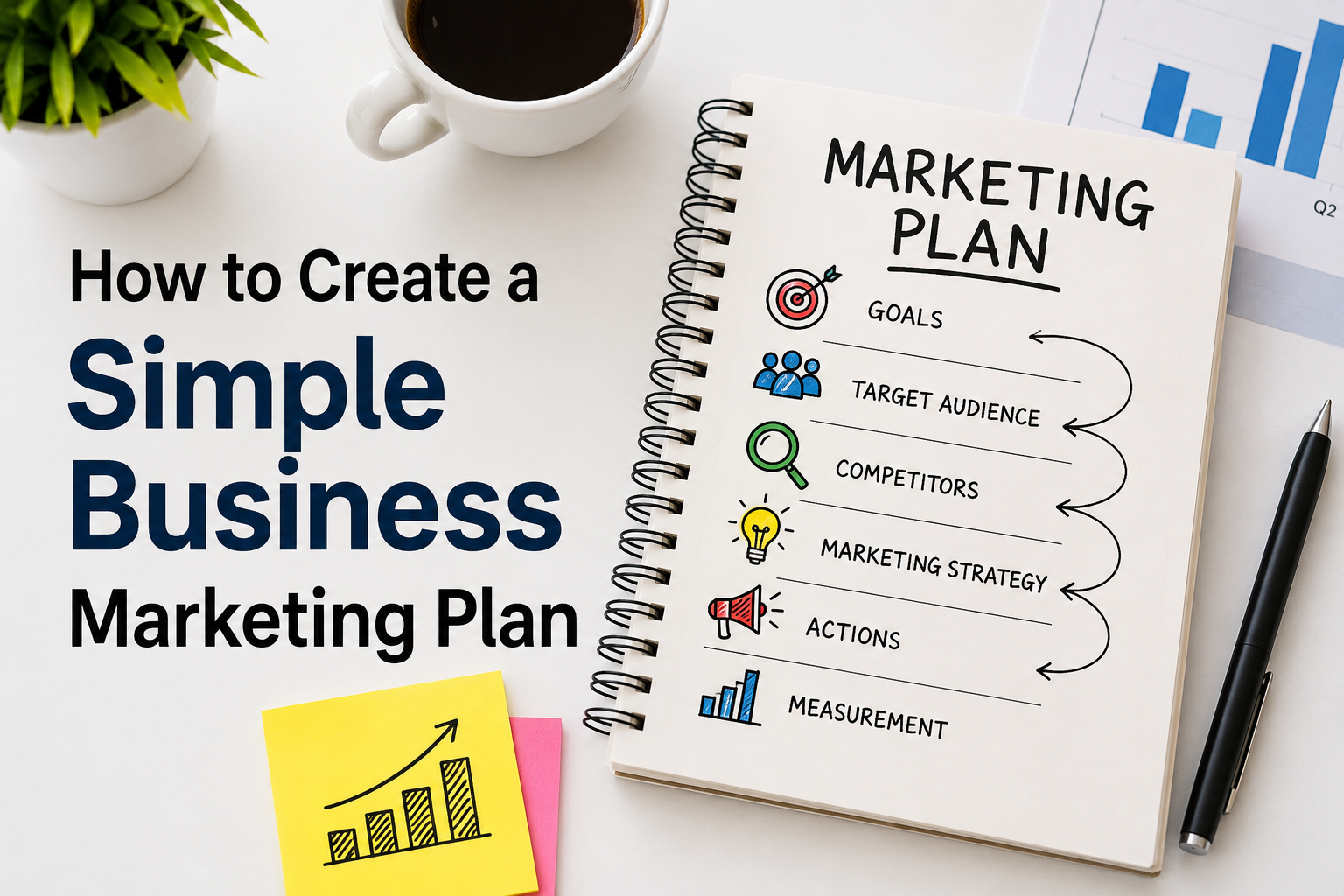
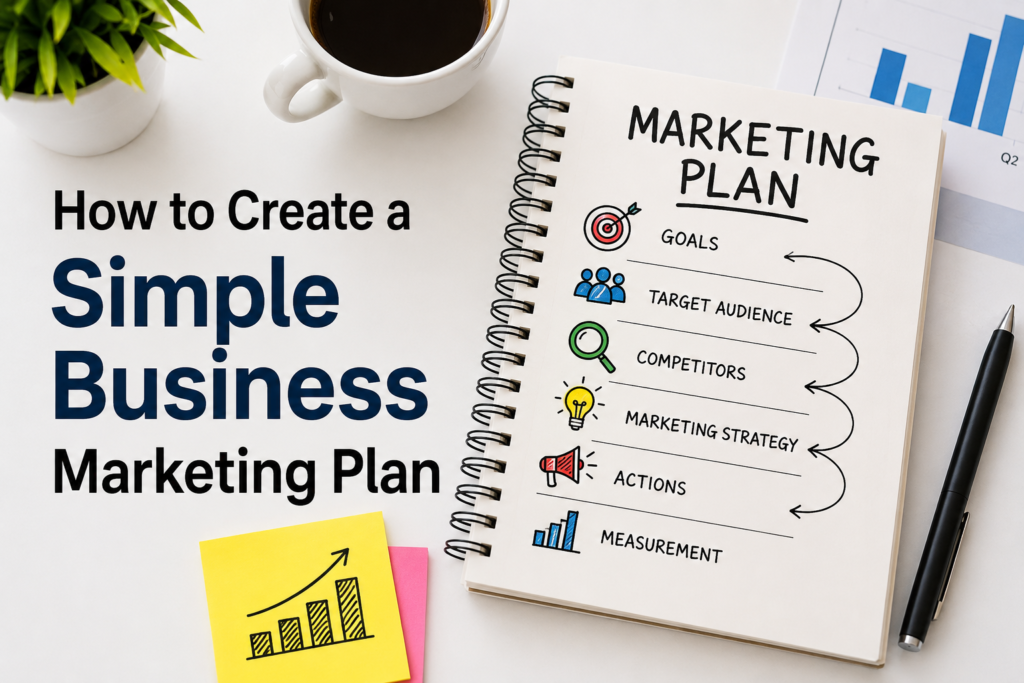
A basic marketing plan can include my business goal, target audience, main competitors, unique selling point, marketing channels, content ideas, budget, schedule, and methods for measuring results.
Once these things are clear, marketing becomes much easier to manage.
Final Thoughts
Creating a simple business marketing plan is one of the best things I can do when trying to grow a business. It gives me direction and helps me avoid wasting time on random marketing activities.
I would start with one clear goal and then focus on understanding my customers. After that, I would study competitors, identify what makes my business different, choose a few suitable marketing channels, create useful content, set a realistic budget, and follow a consistent schedule.
Most importantly, I would measure my results and make changes when necessary.
I believe successful marketing is not always about having the biggest budget or using every available platform. It is about understanding customers, communicating clearly, building trust, and consistently providing value.
A simple marketing plan gives me a practical starting point. As the business grows, I can add more strategies and improve the plan based on real results. Starting simple allows me to stay focused, learn what works, and build a marketing system that can grow with my business.