Running a small business can be exciting, but it can also become stressful when things are not organized properly. I have noticed that many small business owners spend most of their time trying to solve small problems that could easily be avoided with better organization. When customer information is difficult to find, tasks are forgotten, documents are scattered, or money is not tracked properly, even a good business can become difficult to manage.
In my opinion, organization is one of the most important habits a small business owner can develop. You do not need expensive software or a large team to keep your business organized. Simple systems, consistent habits, and a little planning can make a big difference.
Here are some simple ways I believe can help you organize your small business and make your daily work easier.
Keep Your Business Goals Clear
The first thing I would recommend is to have clear business goals. When you know what you are trying to achieve, it becomes much easier to decide where your time and money should go.
For example, you might want to increase sales, get more customers, improve customer service, or launch a new product. Instead of trying to achieve everything at the same time, I prefer to focus on a few important goals.
I also believe that goals should be written down. Keeping everything in your head can make your plans confusing. Write your main goals in a notebook, document, or business planning tool and review them regularly.
Create a Daily Task List
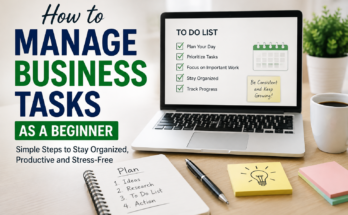
One of the simplest ways to organize a small business is to create a daily task list. I personally think this is much better than trying to remember everything throughout the day.
At the beginning of each day, write down the tasks that need your attention. Put the most important tasks at the top of the list. Try not to create an unrealistic list with dozens of tasks because it can make you feel overwhelmed.
For example, your daily list might include replying to customers, checking orders, updating accounts, preparing content, contacting suppliers, and reviewing sales.
Once a task is completed, mark it as finished. This gives you a clear idea of what you have achieved during the day.
Organize Your Business Files
Small businesses often deal with many documents, including invoices, receipts, contracts, customer information, product details, and marketing materials. If these files are not organized, finding something later can waste a lot of time.
I recommend creating separate folders for different types of documents. You can organize them by year, month, department, customer, or project depending on your business.
For digital files, use clear folder names and file names. Instead of saving something as “Document1,” use a name that explains exactly what the file contains.
I also recommend keeping important files backed up. Losing business documents because of a computer problem can create unnecessary stress.
Keep Your Customer Information Organized
Customers are one of the most valuable parts of any business, so their information should be easy to manage.
You can keep customer names, contact details, order history, questions, and important notes in an organized customer management system. Even a simple spreadsheet can be useful when your business is small.
The important thing is consistency. If you collect customer information, make sure you store it in the same place instead of keeping some information in emails, some in notebooks, and some on your phone.
When customer information is organized, it becomes easier to answer questions and provide better service.
Separate Personal and Business Finances
This is an area where I think many new business owners make mistakes. Mixing personal and business money can make financial management much more difficult.
Whenever possible, keep business income and expenses separate from your personal finances. Use a dedicated business account or at least maintain clear records of business transactions.
Track your income and expenses regularly. You should know how much money is coming into the business and where the money is going.
You do not need to be an accounting expert to start. A simple record of sales, expenses, bills, and other financial activities can give you a much clearer picture of your business.
Create a Simple Business Schedule
Having a schedule can help you avoid spending your entire day reacting to problems.
I like the idea of assigning specific periods to different types of work. For example, you could spend the morning handling important business tasks, another period answering emails and messages, and another period working on marketing or planning.
The exact schedule depends on your business, but the main idea is to create some structure.
A schedule also helps protect your personal time. When you are running a small business, it is easy to work all day and still feel like you have not finished everything.
Use Simple Digital Tools
Technology can make business organization much easier. However, I do not think you need to use dozens of applications.
Too many tools can actually create more confusion. Instead, choose a few tools that solve real problems.
For example, you can use a calendar for appointments, a task management tool for daily work, cloud storage for documents, and accounting software for financial records.
The important thing is to use the tools consistently. A simple system that you actually use is much better than an advanced system that you ignore.
Keep Your Workspace Clean
Your physical workspace can also affect how you work. When your desk is covered with papers, receipts, products, and random items, it can become difficult to concentrate.
I recommend spending a few minutes at the end of each working day cleaning your workspace. Put documents where they belong and remove things you no longer need.
If you keep physical records, use labeled folders or storage boxes. Try to give everything a specific place.
A clean workspace may seem like a small thing, but I believe it can make your working day feel much more comfortable.
Create Simple Business Processes
If you perform the same task repeatedly, create a simple process for it.
For example, if you receive an order, you might follow the same steps every time. First confirm the order, then check payment, prepare the product, update the customer, arrange delivery, and record the sale.
Writing down these steps makes the process easier to follow. It also becomes useful when you eventually hire employees because they can understand how things should be done.
You do not need complicated manuals. Even a simple checklist can save time and reduce mistakes.
Check Your Inventory Regularly
If your business sells physical products, inventory organization is extremely important.
You should know what products you have, what products are selling quickly, and what items need to be reordered. Poor inventory management can result in products being unavailable when customers want them.
I recommend checking inventory regularly rather than waiting until something runs out.
Keep records of purchases and sales so that you have a better understanding of your stock. As your business grows, you can consider using inventory management software.
Organize Your Emails and Messages
Emails and business messages can quickly become difficult to manage. Important customer messages can get buried under advertisements and less important conversations.
Create folders or labels for different types of emails. You might have separate categories for customers, suppliers, orders, payments, and marketing.
Try to respond to important messages within a reasonable period. If a message requires more time, make a note so that you do not forget about it.
I also recommend avoiding unnecessary subscriptions and promotional emails that fill your inbox.
Review Your Business Every Week
Weekly reviews are one of my favorite ways to stay organized.
Choose one day each week to review what happened during the previous week. Look at sales, expenses, unfinished tasks, customer feedback, inventory, and upcoming work.
Ask yourself what went well and what created problems.
This does not need to take hours. Even thirty minutes can be enough for a small business.
A weekly review allows you to identify problems before they become bigger. It also helps you start the next week with a clear plan.

Avoid Trying to Do Everything Yourself
When a business is small, the owner often tries to handle everything. I understand why this happens because money can be limited and hiring employees may not always be possible.
However, as the business grows, doing everything yourself can become a major problem.
Look for tasks that can be automated, simplified, or outsourced. For example, you might eventually outsource bookkeeping, graphic design, website maintenance, or certain administrative tasks.
Your time is valuable. I believe business owners should spend more time on activities that directly help the business grow.
Keep Improving Your Organization System
Organization is not something you complete once and forget. Your business will change as it grows, so your systems should change too.
A method that works when you have ten customers may not work when you have one hundred customers.
Every few months, look at your current system and ask whether it is still helping you. If something feels unnecessarily complicated, simplify it.
The best organization system is one that makes your work easier instead of creating additional work.
Final Thoughts
In my opinion, organizing a small business does not require complicated strategies. The biggest improvements often come from simple habits that are followed consistently.
Keeping clear goals, making daily task lists, organizing files, tracking finances, managing customer information, maintaining a clean workspace, and reviewing the business regularly can make everyday operations much smoother.
I also believe that organization gives a business owner more control. Instead of constantly reacting to problems, you can spend more time planning, serving customers, and looking for new opportunities.
You do not have to organize your entire business in one day. Start with one area that causes the most problems and improve it first. Once that system becomes a habit, move to another area.
Small improvements can eventually create a much more organized and efficient business. For me, the main lesson is simple: when your business is organized, your work becomes easier, your decisions become clearer, and you have more time to focus on growing the business.