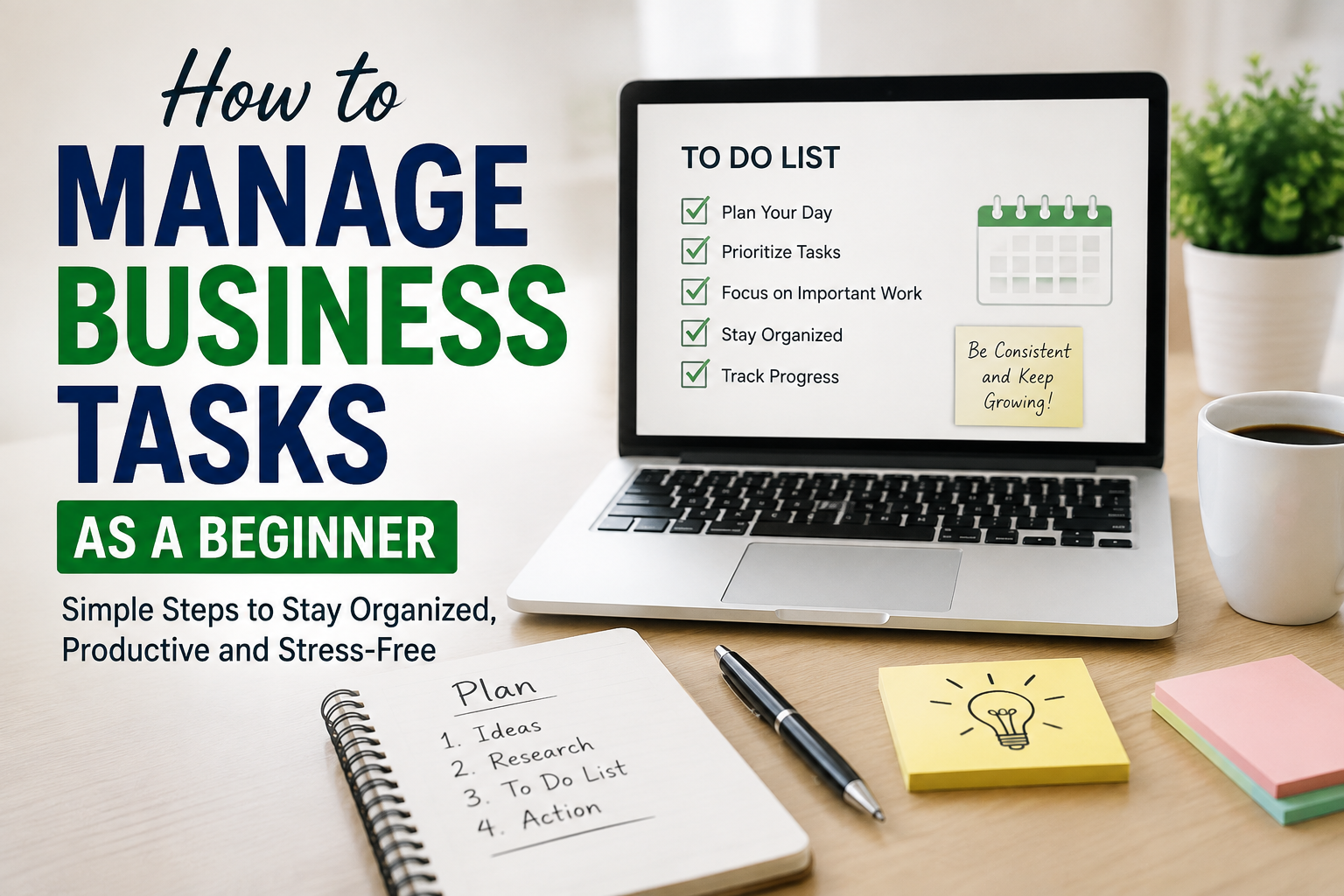
Starting a business can be exciting, but managing everything as a beginner can also feel confusing. When I first think about running a business, I believe one of the biggest challenges is not doing the work itself but knowing what to do first. There are customers to deal with, emails to answer, products or services to manage, money to track, marketing to handle, and many other small responsibilities.
The good thing is that business task management does not have to be complicated. In my opinion, a beginner can manage business tasks effectively by creating simple routines, setting priorities, using useful tools, and staying consistent. You do not need to become perfect overnight. You simply need a system that helps you stay organized.
In this article, I will share some simple ways I believe beginners can manage their business tasks without feeling overwhelmed.
Understand What Needs to Be Done
Before trying to manage business tasks, I think it is important to understand what your business actually requires. Many beginners make the mistake of trying to do everything at the same time. This can quickly create stress and confusion.
I recommend writing down all the regular tasks involved in your business. These may include responding to customers, checking orders, creating content, updating products, managing finances, promoting your business, and following up with clients.
Once everything is written down, it becomes much easier to see where your time is going. You may also discover that some tasks are more important than others.
For me, making a complete list is one of the easiest ways to get control over a busy workload.
Separate Important Tasks From Small Tasks
Not every business task deserves the same amount of attention. Some tasks can directly affect your income, while others can wait for a few hours or even a few days.
For example, replying to an important customer may be more urgent than organizing an old folder on your computer. Completing an order may be more important than spending an hour choosing a new color for your website.
I suggest dividing tasks into three simple groups: important, normal, and can wait.
Important tasks should receive your attention first. Normal tasks can be handled after the urgent work is finished. Tasks that can wait should not take up your valuable time when something more important needs to be done.
This simple habit can make a big difference in daily productivity.
Create a Daily Task List
One of my favorite ways to manage business work is to create a daily task list. Instead of keeping everything in my head, I write down what I want to complete during the day.
I try to keep the list realistic. If I have twenty things to do, I do not expect myself to finish all twenty in one day. I choose the most important tasks and focus on completing those first.
A simple daily list might include answering customer messages, checking sales, completing an important order, creating one piece of content, and reviewing business expenses.
When the list is realistic, completing it feels much easier. It also gives me a sense of progress at the end of the day.
Start With the Most Important Task
A common problem for beginners is spending too much time on easy tasks because they feel comfortable. We may answer simple emails or organize files while avoiding an important project that requires more concentration.
I believe it is better to start the day with the task that matters most.
When your mind is fresh, difficult work can often be completed more easily. Once the biggest task is finished, the rest of the day may feel less stressful.
This does not mean every day has to start with a difficult task. It simply means you should avoid allowing small tasks to consume all of your best working hours.
Set Specific Working Hours
When you run a business, it can be tempting to work all day. I have found that this approach can make business management harder rather than easier.
Setting specific working hours can help create a routine. For example, you might decide to work from 9 in the morning until 5 in the afternoon, depending on your business and personal schedule.
During those hours, focus on business activities. When the workday ends, try to take some time away from business responsibilities.
Having a clear routine can help you stay productive without feeling like you are working every minute of the day.
Avoid Multitasking Too Much
Many beginners believe multitasking means getting more work done. In reality, switching between different tasks can make it harder to concentrate.
Imagine trying to answer customer messages while creating a marketing plan and checking your financial records at the same time. Your attention is divided between several activities.
I prefer working on one important task at a time whenever possible. Once that task is finished, I move to the next one.
This approach may feel slower at first, but it can help reduce mistakes and improve concentration.
Use Simple Business Tools
You do not need expensive software to manage a small business. There are many simple tools that can help you organize tasks.
A basic calendar can help you remember meetings and deadlines. A notes application can store ideas and important information. A spreadsheet can help you track income and expenses. A task management application can help you remember what needs to be completed.
The important thing is not how advanced the tool is. The important thing is whether you actually use it consistently.
I believe beginners should start with simple tools and only move to more advanced systems when the business becomes more complicated.
Keep Business Information Organized
Organization is especially important when you are dealing with customers, payments, products, documents, and other business information.
I recommend creating separate folders for important business documents. You can have folders for invoices, customer information, marketing materials, product details, and financial records.
Use clear file names so you can find documents quickly. This may seem like a small habit, but it can save a lot of time later.
A few minutes of organization today can prevent hours of searching in the future.
Set Deadlines for Yourself
Some business tasks do not have an official deadline. This can make them easy to ignore.
For example, you may want to update your website, create new content, improve your product descriptions, or contact potential customers. Without a deadline, these tasks can continue moving to tomorrow.
I think setting personal deadlines can help solve this problem.
Instead of saying, “I will update my website soon,” choose a specific day. A clear deadline creates a sense of responsibility and makes the task easier to manage.
Learn to Delegate
When a business is small, beginners often try to handle everything themselves. I understand this because saving money can be important in the early stages.
However, there comes a point when doing everything yourself becomes inefficient.
If you have tasks that someone else can handle, consider delegating them when your budget allows. This could include basic administrative work, graphic design, bookkeeping, customer support, or content preparation.
Delegating does not mean you are unable to do the work. It means you are using your time where it has the greatest value.
Track Your Progress
Managing tasks is not only about completing work. I believe it is also important to review what you have achieved.
At the end of each week, take a few minutes to look at your completed tasks. Ask yourself what went well, what took too much time, and what still needs attention.
This weekly review can help you improve your system.
You may discover that certain tasks take longer than expected. You may also realize that some activities are not contributing much to your business. These observations can help you make better decisions.
Do Not Ignore Breaks
Working continuously does not automatically make you more productive. When you become tired, your concentration can decrease and mistakes can become more common.
I believe short breaks are an important part of managing business tasks.
You can take a few minutes to walk around, drink water, have a meal, or simply step away from your screen. After a short break, you may return to your work with better focus.
Taking breaks is not wasting time. It can actually help you work better.
Keep Improving Your System
Your first task management system does not need to be perfect. As your business grows, your responsibilities will change.
A system that works when you have five customers may not work when you have fifty customers. This is completely normal.
I recommend reviewing your routine regularly and making small improvements. You might change your daily schedule, use a different task management tool, delegate certain responsibilities, or create new processes.
The goal is to build a system that grows with your business.
Final Thoughts
Managing business tasks as a beginner can seem difficult, but I believe it becomes much easier when you stop trying to do everything at once. The key is to create a simple system that helps you understand what needs to be done and when it needs to be completed.
Start by writing down your responsibilities, choosing your most important tasks, and creating a realistic daily schedule. Use simple tools to stay organized, avoid unnecessary multitasking, and give yourself clear deadlines.
Most importantly, do not expect yourself to manage everything perfectly from the beginning. Business management is a skill that improves with experience.
In my opinion, consistency is more important than having a complicated productivity system. If you can organize your tasks, focus on important work, review your progress, and improve your routine over time, you will already be taking strong steps toward managing your business more efficiently.
A well managed business does not happen in one day. It develops through small habits repeated every day. As a beginner, focus on those habits, learn from your mistakes, and keep moving forward. With time, managing your business tasks can become a natural part of your daily routine.